




Turbidity Monitoring in Coal Mine Water
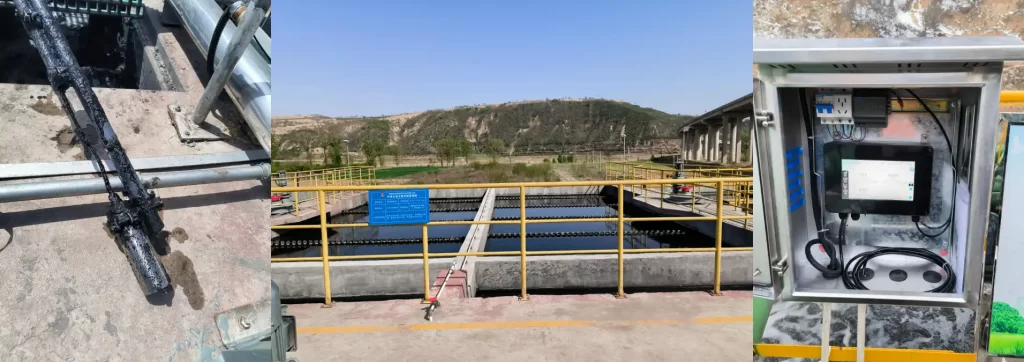
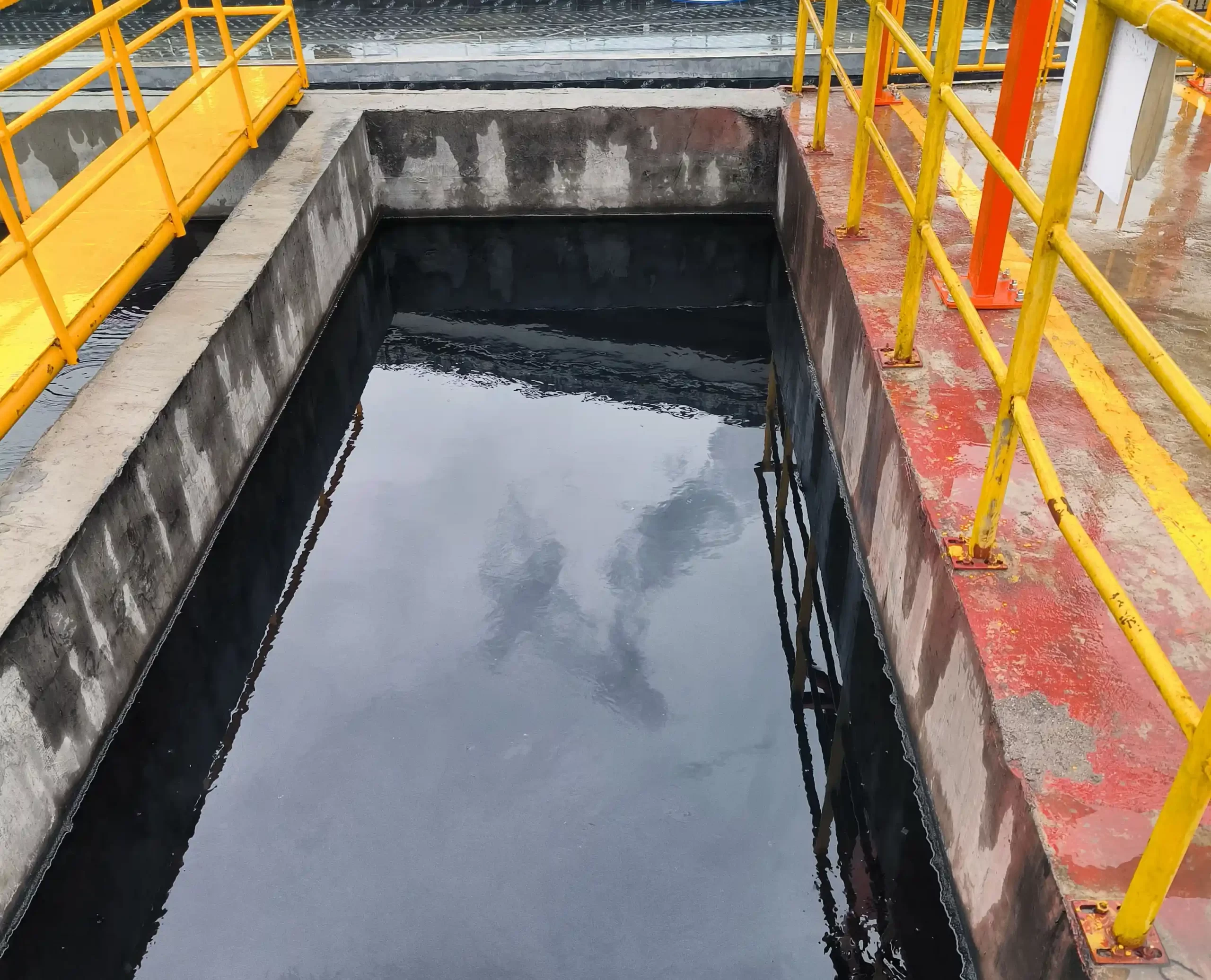
Coal mine water is fundamentally different from surface water, domestic sewage, or general industrial wastewater. It is dark, heavily loaded with suspended coal fines, and often accompanied by oils, gases, and extreme field conditions.
Conventional turbidity sensors, designed for relatively clear or lightly colored water, frequently produce readings that contradict visual observation — the water looks visibly muddy, yet the sensor reports a surprisingly low number. This is not a sensor malfunction in the traditional sense; it is a systematic measurement error caused by the interaction between optical principles and the unique optical properties of dark water.
This article explains why optical turbidity measurement faces inherent challenges in dark-colored water, how coal mine water exacerbates these issues, and what targeted engineering solutions the SPS-T-SC4 turbidity sensor brings to address them.
Optical Turbidity Measurement
The SPS-T-SC4 operates on the combined principle of 90° scattered light measurement and transmitted light detection. A light beam passes through the water sample; a detector captures the light scattered at a right angle (90°), while another measures the intensity of light that travels straight through.
In theory, the more suspended particles present, the stronger the scattered signal and the weaker the transmitted signal — yielding a straightforward correlation to turbidity.
However, this model rests on a critical assumption: the water itself is essentially colorless or near-colorless, meaning any attenuation of the light signal is primarily caused by scattering from suspended particles, not absorption by dissolved colored substances.
When this assumption breaks down, the measurement deviates from reality. Coal mine water is precisely where this breakdown occurs.
Four Critical Challenges for Turbidity Measurement in Dark Coal Mine Water
Challenge 1: Color Interference — The Core “Camouflage”
Dissolved and finely dispersed colored substances in coal mine water — including coal fines, humic acids, and organic compounds — absorb a portion of both the incident light and the scattered light. They do not scatter light; they reduce its intensity.
The sensor interprets this reduced scattered light as “fewer particles present,” leading to a systematic underestimation of actual turbidity. The darker the water, the more severe the underestimation. This is not a calibration issue but a fundamental optical interference that single-angle scattering sensors cannot resolve on their own.
Challenge 2: Air Bubbles — False High Readings
Coal mine water often contains entrained gases that form bubbles. When these bubbles attach to the optical window, they create strong spurious scattering signals. The sensor may suddenly report extremely high values that do not correspond to actual suspended solids concentration, causing false alarms and process control confusion.
Challenge 3: Optical Window Fouling — Progressive Signal Degradation
Fine coal particles adhere readily to the optical window, gradually forming a translucent film. This film attenuates both the emitted and received light, causing a slow, silent drift in measurements. Without active cleaning, the sensor’s readings become progressively less reliable — often without obvious warning signs.
Challenge 4: Harsh Field Conditions — Beyond Standard Industrial Design
Coal mining environments present high humidity, strong electromagnetic interference, fluctuating temperatures, and limited installation access. Sensors designed for clean water applications in controlled environments often fail prematurely or perform inconsistently when deployed underground or in open-pit mining sites.
How SPS-T-SC4 Penetrates the “Color Camouflage” — Targeted Engineering Solutions
Solution 1: Dual-Optical-Path Design — Scattering + Transmission
Unlike single-scattering sensors, the SPS-T-SC4 simultaneously acquires both scattered light and transmitted light data from the same water sample. This dual-path architecture provides complementary optical information, enabling the internal algorithm to compensate — to a certain extent — for signal attenuation caused by color absorption. The result is a turbidity reading that correlates more closely with actual suspended solids, even in deeply colored water.
Solution 2: Automatic Wiper Cleaning for Optical Windows
The sensor is equipped with a motorized cleaning wiper that automatically removes deposits from the optical window at configurable intervals (default: 1800 seconds). This significantly reduces the accumulation of coal fines, extends stable operation periods, and minimizes manual maintenance frequency — a critical advantage in high-fouling applications.
Solution 3: IP68 Protection and RS485 Modbus RTU Communication
The direct-cable versions (SPS-T-SC4-S11 and -P11) achieve IP68 ingress protection, allowing long-term submersion in harsh environments. The standard Modbus RTU over RS485 interface ensures reliable communication even in electrically noisy industrial settings, and integrates seamlessly with existing mine monitoring and SCADA systems without additional protocol converters.
Solution 4: Optimized Range and Accuracy for Coal Mine Water
With a turbidity measurement range of 0–1000 NTU and a resolution of 0.001 NTU, the SPS-T-SC4 covers the typical turbidity spectrum of coal mine water. Its accuracy specification — ±3% or ±0.015 NTU (whichever is greater) — ensures reliable readings across both low-end and high-end portions of the range, avoiding the “poor at both ends” compromise found in many general-purpose sensors.
Installation and Maintenance: Getting the Most from This Sensor
Installation Configurations
The SPS-T-SC4 supports three installation modes:
• Submersion-type: Directly immersed in the water body — suitable for open channels, sumps, and tanks.
• Flow-through type: Installed horizontally or vertically in a flow cell — ideal for pressurized or gravity pipelines where representative sampling is required.
• In-line pipe type: Mounted directly into pipelines via specialized fittings — enabling installation without depressurizing the system.
Important selection note: Models with waterproof connection threads (SPS-T-SC4-S01 and -P01, IP65) cannot pass through standard installation holes and are not suitable for flow-through or in-line pipe installations. For fully submersible applications requiring IP68, choose the direct-cable versions (-S11 and -P11).
Routine Maintenance
The user manual recommends:
• Clean the optical window every 1 to 3 months, depending on site fouling conditions.
• Replace the cleaning wiper blade every 12 months.
• Never rotate the wiper blade manually during cleaning or replacement — this can damage the internal drive mechanism.
Calibration Considerations
All calibrations — zero point, turbidity standard, suspended solids (TSS), and temperature — must be performed with a clean sensor in a dark environment to avoid ambient light interference.
Critical warning: Writing 1 to the calibration control register (0x800F) permanently saves the new calibration data and overwrites previous values. This action is not reversible through a factory reset command. If an error is made, the only remedy is to re-perform the complete calibration procedure. Use the -1, -2, -3, or -100 values only to clear specific or all calibration datasets — with extreme caution.
From Misjudgment to Precision — A Purpose-Built Solution for a Long-Ignored Problem
The SPS-T-SC4 does not rely on any single revolutionary technology. Its strength lies in a practical, systematic engineering response to a specific yet frequently overlooked challenge: turbidity monitoring in dark, high-turbidity waters like coal mine drainage.
By combining:
• dual optical paths (scattering + transmission),
• automated window cleaning,
• rugged IP68 construction,
• industrial-standard Modbus communication,
• and a range tailored to 0–1000 NTU applications,
the SPS-T-SC4 transforms coal mine water turbidity monitoring from a source of unreliable data and constant manual intervention into a stable, remotely accessible, and digitally traceable process. When paired with the MC-W-S series transmitters and WQS-Cloud Server, users gain both on-site and remote visibility — enabling data-driven optimization of water treatment processes in one of the harshest industrial environments.