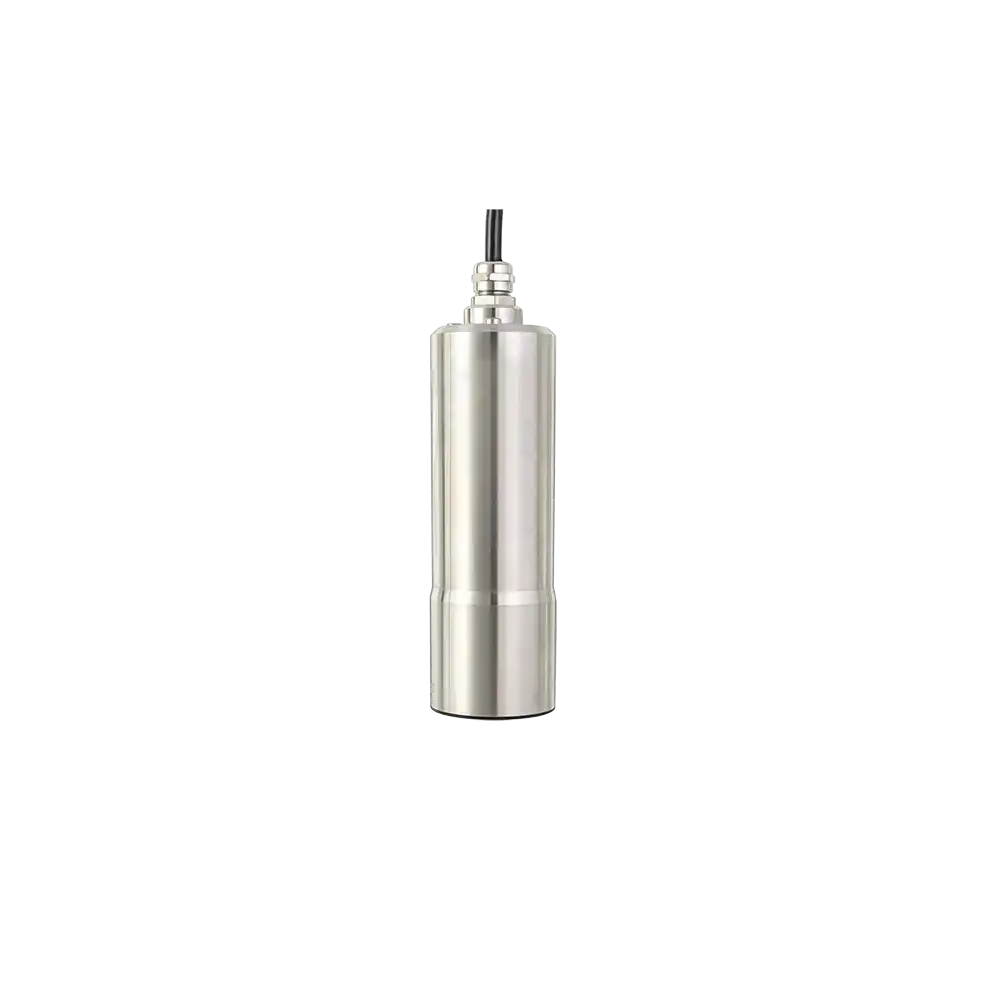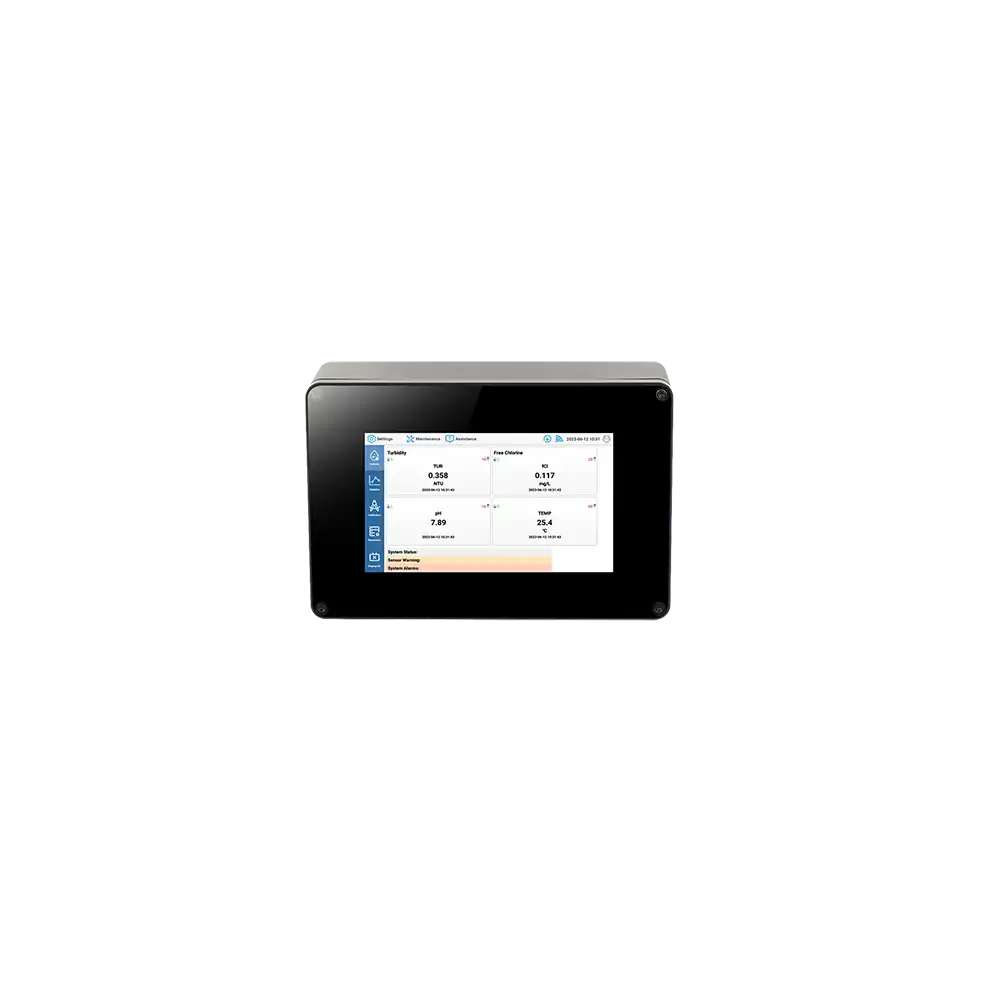


An RS485 water quality sensor is a device that measures various physical and chemical parameters of water (like pH, ORP, conductivity, dissolved oxygen, turbidity, etc.) and transmits the data using the RS485 serial communication standard.
The key idea is that multiple sensors (often called “nodes” or “slaves”) can be connected to a single central controller (a “master” like a PLC, SCADA system, or data logger) over a single, long-distance cable.
Key Advantages of RS485
Why is RS485 so popular for these applications?
- Long Distance Communication: RS485 can reliably transmit data over distances of up to 1200 meters (4000 feet) without needing signal boosters, making it ideal for large facilities like water treatment plants.
- Noise Immunity: It uses a differential signal (two wires for data: A and B). This means it’s highly resistant to electrical noise from motors, pumps, and other equipment, which is common in industrial environments.
- Multi-Drop Network: You can connect multiple sensors (32, 64, or even more with repeaters) on a single communication bus. This drastically reduces wiring costs and complexity compared to analog (4-20mA) sensors which each need their own wire run.
- Bidirectional Communication: Unlike a simple analog signal, RS485 allows the master device to not only receive data from the sensors but also to send commands to them (e.g., to calibrate, change an address, or set a sampling interval).
Common Water Quality Parameters Measured
RS485 sensors are available for almost any water quality parameter:
- Physical Parameters:
- Turbidity: Measures water cloudiness.
- Temperature: A fundamental parameter, often included with other sensors.
- TSS (Total Suspended Solids): Measures the mass of suspended particles.
- Chemical Parameters:
- pH: Measures acidity or alkalinity.
- ORP (Oxidation-Reduction Potential): Indicates the water’s ability to cleanse itself or break down contaminants.
- Conductivity (EC) / TDS (Total Dissolved Solids): Measures the water’s ability to conduct electricity, related to ion concentration.
- Dissolved Oxygen (DO): Critical for aquatic life and wastewater treatment processes.
- Ion-Specific Sensors: Ammonia, Nitrate, Chloride, Fluoride, etc.
- Other:
- Chlorine: Both free and total chlorine.
How the System is Wired (The RS485 Network)
A typical setup looks like this:
[ Master Device (PLC/PC/Data Logger) ] <--> [ Sensor 1 ] <--> [ Sensor 2 ] <--> [ Sensor N ]Wiring Rules:
- Bus Topology: Use a daisy-chain topology (as shown above). Avoid star topologies.
- Twisted Pair Cable: Always use a shielded twisted pair cable for the A and B data lines. This enhances noise immunity.
- Termination Resistors: Install a 120-ohm termination resistor between the A and B lines at both ends of the main cable run (at the first sensor and the last sensor). This prevents signal reflections.
- Common Ground: Connect the “GND” or “COM” reference from the master to all sensors to ensure a common ground potential.
- Power: Most RS485 sensors require a separate power supply (e.g., 12-24V DC). This is often run on separate wires within the same cable.
Communication Protocols (The “Language”)
RS485 is just the physical layer (the hardware, the “highway”). The data being sent needs a protocol (the “language” or “rules of the road”). The most common protocols are:
- Modbus RTU: This is the de facto industry standard. It’s open, robust, and widely supported by PLCs, SCADA, and data loggers. When a sensor says “RS485 Modbus,” it means it speaks the Modbus RTU protocol over an RS485 connection.
- Profibus DP: Another common industrial protocol, more prevalent in certain regions and industries (especially manufacturing in Europe).
- Manufacturer-Specific Protocols: Some brands use their own custom protocols, which may require specific software or drivers to interpret.
Typical Setup & Configuration Steps
- Physical Installation: Mount the sensors in the water (in a tank, pipe, or open body of water) using appropriate fittings or holders.
- Wiring: Connect all sensors to the RS485 bus following the daisy-chain rules. Connect the bus to your master device.
- Addressing: Configure a unique slave address (e.g., 1, 2, 3…) for each sensor on the network. This is usually done via dip switches or software commands.
- Protocol Configuration: Set the communication parameters on both the master and all sensors to match. This includes:
- Baud Rate (e.g., 9600, 19200, 38400 bits per second)
- Data Bits (usually 8)
- Parity (None, Even, Odd)
- Stop Bits (usually 1)
- Master Device Programming: Configure your PLC, data logger, or software to poll each sensor by its unique address, request the data registers (as defined in the sensor’s Modbus register map), and interpret the values.
Example: Reading from a Modbus Sensor
A master device might send a query like this:[Slave Address] [Function Code 03] [Start Register Hi] [Start Register Lo] [Number of Registers Hi] [Number of Registers Lo] [CRC Check Lo] [CRC Check Hi]
The sensor with the matching address would respond with its data. For example, the pH value stored in a specific register.
Popular Manufacturers
- Endress+Hauser
- Hach
- Xylem (YSI, WTW)
- Hamilton
- Atlas Scientific (Popular with hobbyists and for smaller-scale projects)
- Sensorex
- SPECSENS
Summary: When to Choose an RS485 Water Quality Sensor
Choose an RS485 sensor if your application requires:
- Long-distance between sensors and the controller.
- A network of multiple sensors.
- High noise immunity in an industrial setting.
- Bidirectional communication for configuration and calibration.
- Integration with industry-standard systems like PLC or SCADA.
For simple, short-distance applications with just one or two sensors, an analog (4-20mA) or SDI-12 sensor might be sufficient. For very high-speed or complex distributed systems, Ethernet/IP or Modbus TCP might be a better choice.